Safe Property Conditions
Clear away hung-up branches, split trunks, and heavy debris before they cause injury or damage.
Post-cyclone clearing, split trunk felling, and insurance-friendly storm damage tree removal Marian property owners need.
Servicing storm-affected properties across Marian, Mirani, Walkerston, and the Mackay region.
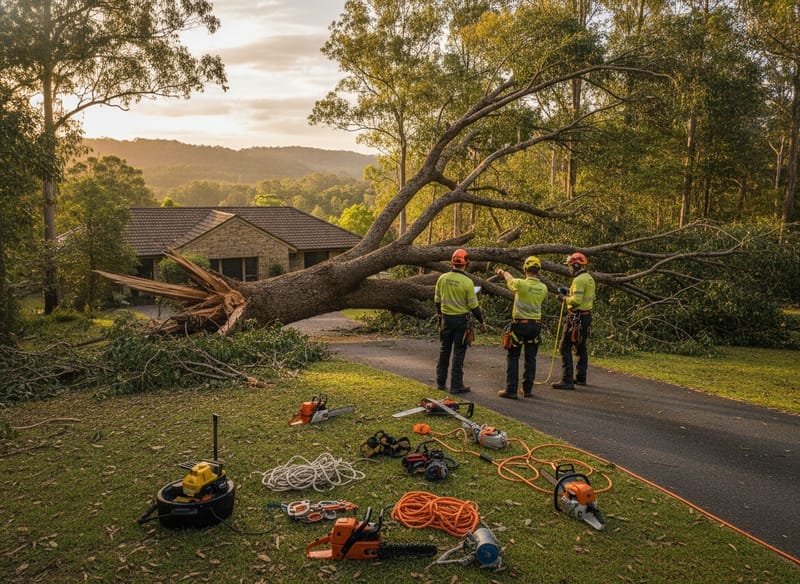
The wet tropical storm season can take a heavy toll on our local tree canopy. Our storm damage tree removal Marian service is designed to manage the aftermath of cyclones and severe storms, handling everything from large split trunks to tangled branch piles that block fences, sheds, and pathways.
During events like ex-Tropical Cyclone Koji, Marian saw heavy rainfall that saturated the local clay soils. This waterlogging, combined with intense wind, leads to healthy trees uprooting completely, demanding specialized winches and rigging to clear safely.
Clear away hung-up branches, split trunks, and heavy debris before they cause injury or damage.
Receive professional invoices and detailed, photo-supported reports that match insurer requirements.
Get your lawns, paddocks, and fences back in order with our professional mulching and clearing services.
We inspect the storm damage, check for powerline risks, and plan our rigging setup.
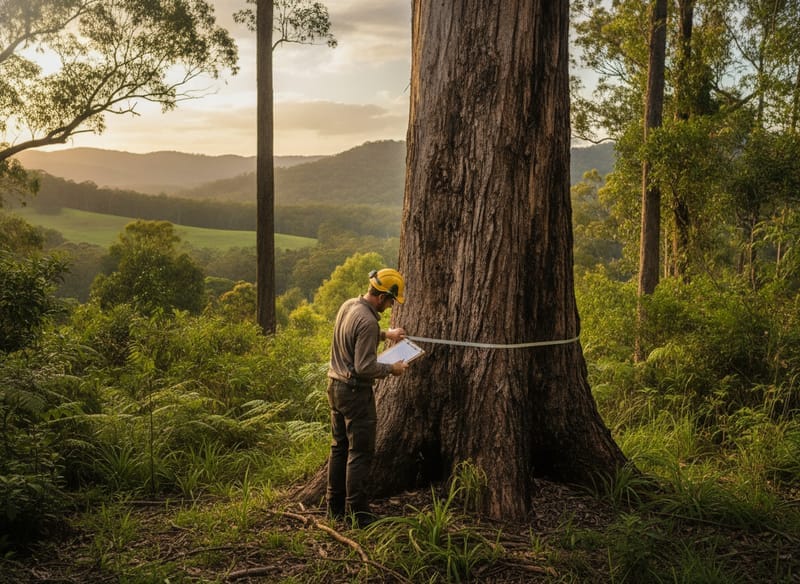
If required, we document the damage with detailed photos and provide an upfront quote for your insurer.
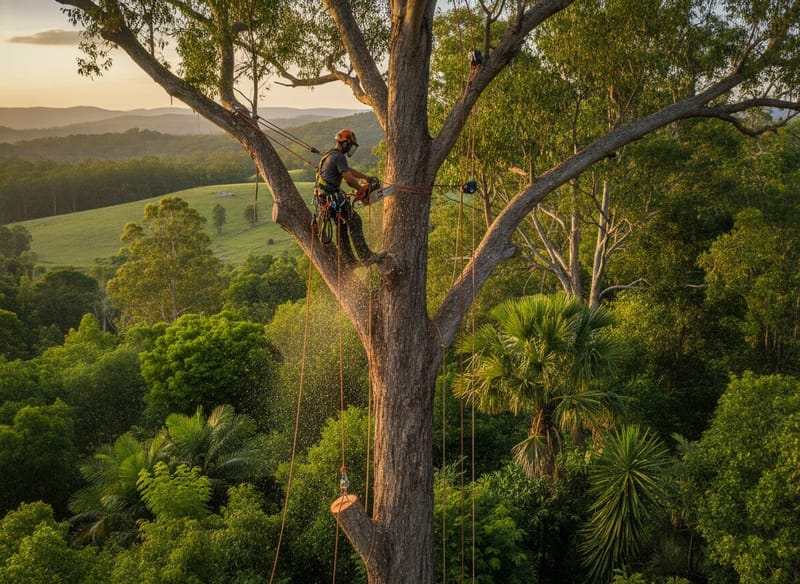
We carefully secure the tree and use controlled cuts to reduce tension and process the timber.
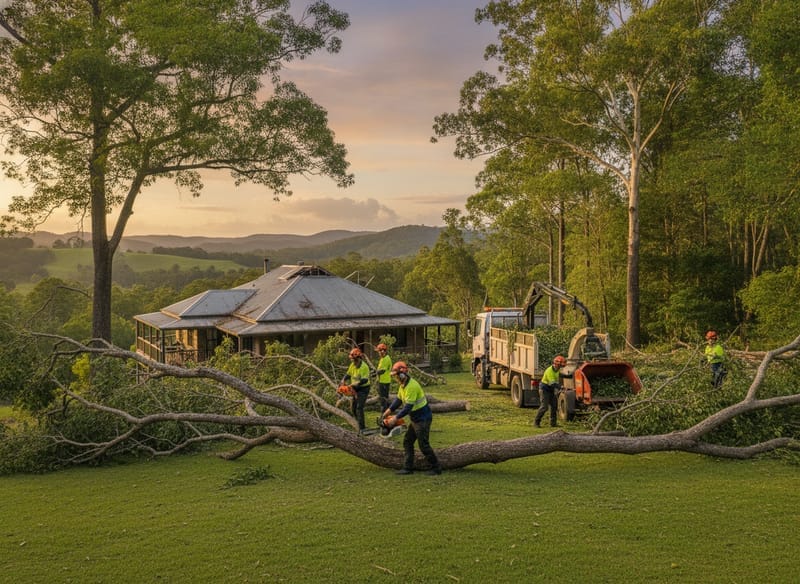
We run all storm debris through our wood chippers, clearing the area and leaving premium mulch for your gardens.
When severe monsoonal troughs, squalls, or tropical cyclones track inland along the Pioneer River, tree failures happen fast. We provide dedicated Storm Damage Tree Removal Marian residents, farmers, and acreage owners depend on to secure properties, open blocked driveways, and extract dangerous hanging limbs. Saturated alluvial soils combined with high wind gusts frequently destabilise mature canopies, turning massive trees into severe structural threats. Whether an old mango tree has collapsed across a machinery shed, a poinciana has split over your roofline, or a forest red gum is tangled in boundary fencing, our qualified crew responds. We bring commercial-grade heavy equipment, high-capacity wood chippers, and crane-truck setups directly to your Marian acreage or residential block to handle hazardous storm timber safely and efficiently.
Attempting to tackle storm-damaged timber with domestic chainsaws and farm vehicles is exceptionally dangerous. Saturated root systems and partially fallen trees store massive structural tension and compression forces, often causing trunks to spring back, kick out, or shatter unpredictably when cut by untrained hands. Inexperienced operators frequently cause secondary structural damage to roofs, fences, and outbuildings, or make precarious canopies even more hazardous. Improper post-storm hacking also violates the AS4373 Pruning of Amenity Trees standard, creating jagged stubs and severe bark tearing that invite wood rot and fungal pathogens into surviving trees. Poor cut selection leads to weakly attached epicormic regrowth, creating even greater risk during the next severe weather event. Our team uses calculated rigging, modern winch-assisted dismantling, and systematic tension releases to safely neutralise hung-up limbs, uprooted root plates, and compromised trunks without collateral property damage. We protect your retained assets while fully eliminating immediate hazards.
Deployed for large trees fallen directly onto houses, sheds, or driveways. We utilise load-rated winches and mobile crane support to lift heavy timber vertically off structures, preventing secondary impact damage during cutting.
Systematic cross-cutting techniques applied to twisted, bowed, or trapped logs under extreme internal strain. Our AQF Level 3 climbers and chainsaw operators relieve energy loads safely using specialised step-cutting and boring release methods.
For partially uprooted forest red gums, figs, or raintrees where root plates have lifted. We systematically de-weight the canopy section by section to prevent sudden counterweight snap-back as the trunk is severed.
Removal of broken, suspended branches caught high in mature tree crowns. Accessed via rope climbing techniques or elevated work platforms (EWPs), lowering hazards on controlled friction rigging lines without dropping onto ground assets.
Canopy restoration on viable trees that have suffered partial branch failure. We execute branch collar cuts, crown thinning, and selective deadwooding compliant with AS4373 to prevent decay and foster sound future growth.
Processing massive volumes of storm debris with commercial 12-inch wood chippers, mini-loaders, and heavy tipper trucks. Debris is turned into nutrient-rich mulch for reuse on gardens or removed completely from the property.
When storm damage impacts your property, our structured triage and execution process ensures rapid, safe resolution: - Step 1: Emergency Triage & Site Assessment: We inspect the property and categorise hazards into four tiers: immediate structural hazards over living quarters or accessways, secondary hung-up limbs, compromised standing trees, and fallen ground debris. - Step 2: Insurance Documentation & Transparent Quoting: Before cutting, we take clear photo evidence and prepare an itemised breakdown detailing each tree, cut, and machinery requirement, formatted for fast insurance processing. - Step 3: Hazard Make-Safe & Structural Rigging: Our AQF Level 3 climbers establish secure anchor points, ground exclusion zones, and friction-controlled lowering lines to stabilise shifted timber before severance. - Step 4: Precision Dismantling & Cutting: Using specialised top-handle climbing saws and heavy ground saws (MS500i / 572XP), we methodically relieve internal timber tension, section by section. - Step 5: High-Speed Chipping & Site Debris Extraction: Mini-loaders feed limbs into our high-capacity wood chippers, while heavy log rounds are loaded onto tippers or left neatly stacked for firewood according to your instructions. - Step 6: Final Clean-Down & Stump Grinding: We rake clean the affected grounds, blow down driveways and roofs, and provide below-grade stump grinding (150–300mm depth) upon request to leave your site safe and tidy.
Safety and statutory compliance govern every emergency response we undertake. All tree pruning and remedial works adhere strictly to AS4373 (Pruning of Amenity Trees), avoiding damaging lopping techniques. For acreage and construction developments, we operate under AS4970 (Protection of Trees on Development Sites). Our field crew holds AQF Level 3 qualifications in arboriculture, accompanied by current tickets in Chainsaw Felling, Working at Heights (RIIWHS204D), and EWP operation. We maintain comprehensive Public Liability insurance and full WorkCover protection for all personnel. Consulting risk evaluations and development assessments are directed by our AQF Level 5 arborists.
Marian properties face specific storm challenges due to Pioneer Valley topography and heavy monsoonal rainfalls. During the wet season from November to April, deep alluvial soils become completely waterlogged. When high winds strike, shallow-rooted species such as poinciana (*Delonix regia*), backyard mango (*Mangifera indica*), and sprawling raintrees (*Samanea saman*) experience whole-tree root plate failures rather than minor branch snaps. Following extreme events like ex-Tropical Cyclone Koji, local property owners should note that the Mackay Disaster District declaration includes a state clearing exemption valid through 13 January 2027 for immediate hazards to life, infrastructure, and property under the Mackay Region Planning Scheme 2017 and Vegetation Management Act 1999. We assist clients from Marian to Mirani, Walkerston, and Pleystowe by documenting tree damage thoroughly for insurance adjusters and council compliance records before clearing.
After a severe storm event, remaining trees often carry hidden structural weaknesses, micro-fractures, and compromised root systems. Property owners should inspect surviving canopies after heavy rainfall for soil cracking near root zones, sudden trunk leaning, or weeping sap wounds.
Mulch generated during removal can be spread 75mm deep over root zones (kept clear of the trunk collar) to retain moisture and restore soil biology. We recommend booking a follow-up assessment within 6 to 12 months with our AQF Level 5 arborists to check epicormic shoot stability and ensure your trees remain resilient against future storm seasons.
Storm cleanup costs depend on the volume of debris, the safety risks involved, and how easy it is to access the site.
We supply detailed, transparent quotes with clear pricing breakdowns for both you and your insurer.
We provide reliable storm cleanup services throughout the Pioneer Valley and greater Mackay region.
Contact our Pioneer Valley team for a safe, reliable storm assessment.
Request a Storm Cleanup Quote