Secure Your Yard
Clear out heavy, suspended hanging limbs that can drop unexpectedly onto children or visitors.
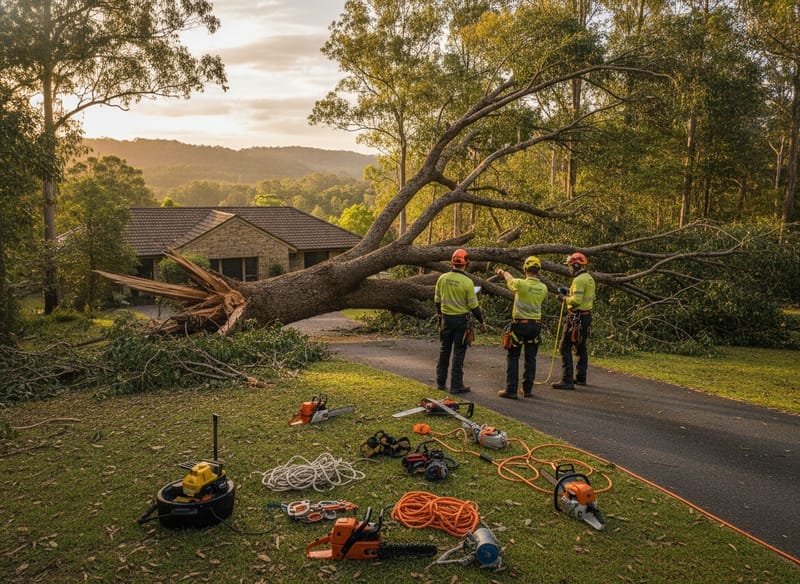
Clearing shattered canopies, hung-up branches, and fallen trees on coastal blocks following tropical storms.
Clearing storm and cyclone damage across Shoal Point and Mackay beaches
Following severe weather events, we provide efficient storm damage tree removal Shoal Point. The region regularly experiences extreme wet season monsoons and tropical cyclones, such as ex-Tropical Cyclone Koji. Our team specializes in cleaning up massive fallen limbs, hung-up branches, and structurally failed trees. We provide detailed reports and photo documentation to support your insurance claims and ensure council rule compliance.
During ex-Tropical Cyclone Koji, Shoal Point faced massive wind shear and over 350mm of rain. Saturated coastal sands led to major root failure, with large trees tipping over entirely rather than just dropping limbs.
Clear out heavy, suspended hanging limbs that can drop unexpectedly onto children or visitors.
We supply professional photo and written records to guarantee your insurance company has the evidence they need.
Felling cracked African Mahoganies or leaning palms before secondary gusts blow them onto your roof.
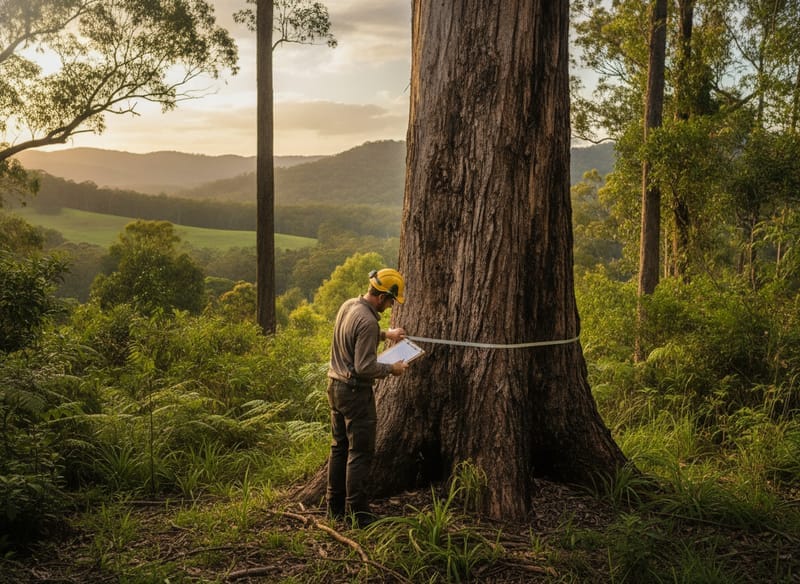
We survey the storm damage, identifying high-risk hanging limbs and split trunks.
We photograph the immediate hazards to secure clearing under state disaster exemptions.
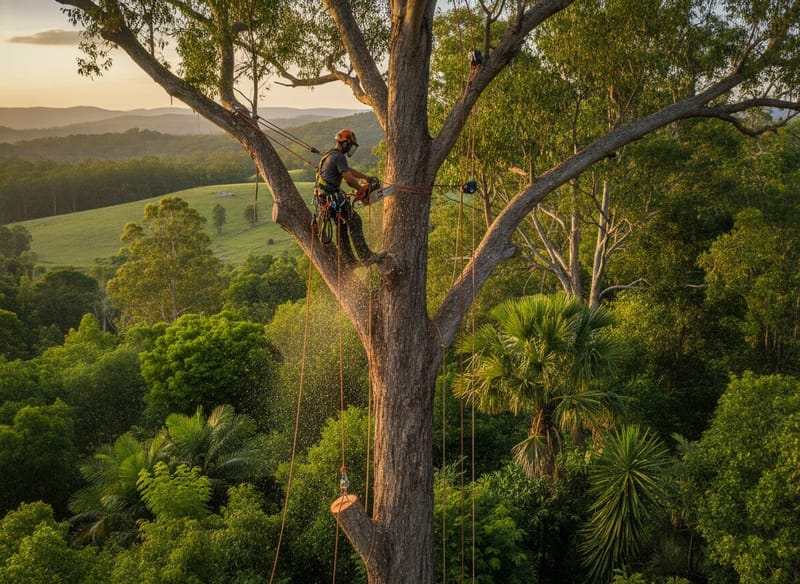
Our climbers dismantle and clear the dangerous timber, working systematically to prevent shifts.
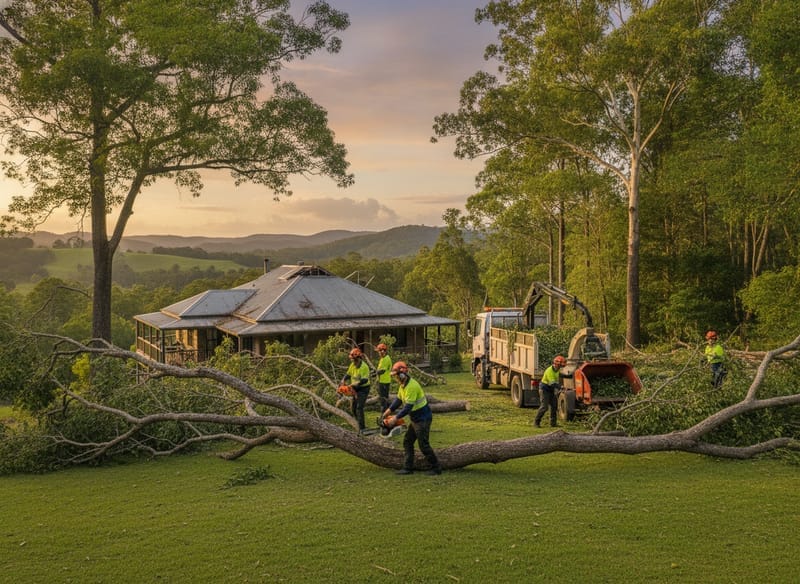
All fallen debris is processed through the chipper, returning the block to a clean, usable state.
When severe wet-season storms strike the Mackay coast, Storm Damage Tree Removal Shoal Point becomes an priority for protecting homes, driveways, and essential infrastructure. Shoal Point sits right on the edge of the Coral Sea, leaving coastal properties, established residential gardens, and acreage parcels directly exposed to monsoonal gale-force winds and cyclonic squalls. Saturated coastal sands quickly lose their shear strength during heavy downpours, causing mature trees to uproot or shed major structural limbs without warning. Our team provides immediate, heavy-duty storm response across Shoal Point, Bucasia, Eimeo, and the wider Northern Beaches. From wind-thrown poincianas resting against rooflines to storm-snapped coconut palms hanging over boundary fences, we mobilise specialised equipment to make properties safe. We manage the entire process from initial site stabilisation and hazard mitigation through to log processing, wood chipping, and insurance claim documentation.
Tackling storm-damaged timber without commercial arborist equipment and professional rigging skills carries extreme safety risks. Storm-felled trees rarely sit neutrally; they store massive amounts of hydraulic and mechanical tension across twisted trunks and pinched branches. An amateur saw cut into a trunk under load frequently triggers a violent 'barber-chair' split or releases a compressed branch like a catapult, resulting in catastrophic injuries or secondary property impact.
Overturned root plates in waterlogged sandy soil present another hidden danger, as severed root systems can suddenly snap back into their hole when the trunk's counterweight is removed. Furthermore, unqualified contractors often resort to improper lopping or flush-cutting, which violates AS4373 (Pruning of Amenity Trees), leaving surviving trees riddled with decay pockets and hazardous epicormic regrowth.
Our qualified crew uses engineered dynamic rigging, mechanical winches, and directional felling techniques to neutralise stored energy safely. We systematically dismantle hung-up canopies, stabilise partially failed root plates, and safely extract heavy timber away from homes without causing further structural damage.
Our storm damage removal protocols follow rigid engineering and arborist practices designed to safely neutralise high-risk, tension-loaded timber.
Rapid on-site assessment categorising risks: Priority 1 (direct structural threats, blocked access, downed service lines), Priority 2 (hung-up widow-makers and fractured limbs), and Priority 3 (fallen timber on open ground).
Controlled piecemeal dismantling of storm-thrown stems using heavy-duty rigging blocks, dynamic friction bollards, and high-tensile winch lines to systematically relieve spring-pole tension before cutting.
Utilising mobile crane picks and compact tracked spider lifts to access structurally unstable canopies and extract storm-damaged limbs over structures without transferring loads to damaged roofs.
Chocking and counter-anchoring partially exposed or uprooted root plates in loose coastal soils before sectioning trunks, preventing violent root-ball recoil.
On-site processing of green waste, fronds, and limbs up to 12 inches in diameter through commercial wood chippers, transforming hazardous debris into clean, usable garden mulch.
Mechanical grinding of storm-compromised stumps to a depth of 150–300mm below finished grade to eliminate ground-level trip hazards and clear room for replanting.
Our emergency response begins with rapid site mobilisation and safety containment. Upon arriving at your Shoal Point property, our Senior Arborist conducts a 360-degree hazard assessment to establish exclusion zones, identify compromised power lines, and determine structural load points. Before making a single cut, we thoroughly photograph all tree failures, structural impact zones, and compromised root plates to provide an itemised, formal report tailored directly for insurance adjusters. Next, our crew executes the make-safe operation. Using high-angle climbing systems, spider lifts, or crane support, our AQF Level 3 arborists systematically section hung-up branches, reduce crown weight, and release trunk tension using step cuts and bypass cuts. Once the hazardous canopy is safely on the ground, our ground crews feed debris into our high-capacity wood chippers and load heavy millable logs onto our tipper trucks. We rake the site clear of twigs, sweep driveways, and restore immediate property access. Finally, we assess surviving adjacent trees for structural fractures, advise you on necessary formative pruning under AS4373, and supply written compliance documentation under local planning frameworks.
All storm recovery operations strictly adhere to AS4373 (Pruning of Amenity Trees) and AS4970 (Protection of Trees on Development Sites). Our climbing arborists hold AQF Level 3 qualifications, and our consulting assessments are signed off by AQF Level 5 arborists holding full Working at Heights, EWP, and chainsaw operations licences (FWPCOT2237/2238/2239/3317).
We operate with full public liability insurance and complete WorkCover protection across our entire team and machinery fleet.
Following ex-Tropical Cyclone Koji, the Mackay Disaster District declaration includes an active state clearing exemption running through to 13 January 2027. This exemption permits landholders across Mackay Regional Council to clear fallen timber and hazardous trees to prevent property loss, protect life, and restore infrastructure without standard pre-approval delays, backed by our comprehensive photo logs and arborist records.
Executing Storm Damage Tree Removal Shoal Point requires a nuanced understanding of our coastal microclimate. Situated north of Mackay between Bucasia Beach and Reliance Creek, Shoal Point is defined by sandy, saline coastal soils and strong maritime winds. During the wet season (November to April), intense rainfall saturates the topsoil, drastically reducing root anchorage. Shallow-rooted poincianas (*Delonix regia*) and broad-canopied backyard mango trees (*Mangifera indica*) are notorious for sudden root-plate failure when buffeted by gale-force winds. Large paperbarks (*Melaleuca*) and forest red gums (*Eucalyptus tereticornis*) in low-lying pockets frequently drop heavy, brittle limbs, while tall coconut palms (*Cocos nucifera*) suffer crown shear and generate heavy projectile hazards. We work in close alignment with Mackay Regional Council's Mackay Region Planning Scheme 2017, respecting coastal biodiversity overlays and the Vegetation Management Act 1999 while executing storm relief.
Once the initial emergency clears, surviving trees require careful monitoring to prevent future structural failures. Storm winds often cause internal longitudinal fractures and root tears that remain invisible from the ground until secondary decay sets in.
Contact our team for a comprehensive post-storm health audit or pre-cyclone canopy thinning to protect your home before severe weather arrives.
Storm cleanup is priced based on the volume of debris, tree stability, and access issues.
We provide transparent, fixed written quotes on site before commencing storm cleanup.
We clear storm and cyclone tree damage throughout Shoal Point and the Mackay region.
Restore safety to your property with our professional, insurance-friendly cleanup team.
Book Storm Cleanup